
The Future of Manufacturing Is Cooperative: COROB’s Final Achievements
The COROB project has officially come to an end. Funded by the EU’s Horizon Europe programme and the Swiss State Secretariat for Education, Research and Innovation (SERI), COROB — Cooperative robotics powered by AI and data for flexible production cells — set out to develop a flexible, cooperative and intelligent multi-robot solution for arc welding-based manufacturing, covering both joining and additive manufacturing. As the project closes, the results speak for themselves: cooperative robotics powered by AI and data is not only a research topic, but a practical pathway towards Industry 5.0.
Key achievements
- Two industrial demonstrators, successfully validated. COROB validated two cooperative multi-robot demonstrators: one for jig-less robotic welding and one for WAAM-based tooling repair. Together, they show that cooperative robotics powered by AI and data can address real industrial manufacturing challenges. See them in action in our use case demonstrator videos.
- More productive, more flexible welding. The cooperative welding cell reduced production time by 60.1%, while eliminating the need for dedicated fixtures and enabling the same cell to manufacture multiple product references.
- Repair instead of replace: a strong sustainability impact. Compared to manufacturing new tooling, WAAM-based repair achieved:
– 41.7% to 64.6% cost reduction
– 61.5% to 70.3% reduction in downtime
– approximately 82–90% reduction in energy consumption
– approximately 88–92% reduction in CO₂ footprint - AI-powered manufacturing workflows. COROB demonstrated active learning, no-code AI lifecycle management, MLOps pipelines, AI-based monitoring and intelligent decision-support tools. These significantly reduced model training and maintenance effort and made advanced AI accessible to manufacturing experts.
- An open and interoperable ecosystem. COROB integrated technologies from the consortium and from external innovators, showing that platform-based architectures and common data models can simplify the integration of heterogeneous robots, AI services, sensors and third-party solutions.
- People at the centre. Thanks to intuitive interfaces and user-centred design, operators with limited robot programming experience were able to interact with and operate advanced robotic manufacturing systems.
- A broader European innovation ecosystem. Through two Open Calls, COROB supported 16 innovative solutions from external innovators, creating a lasting community around cooperative robotics, AI and smart manufacturing. Meet them on our Beneficiaries page.
The COROB Final Event
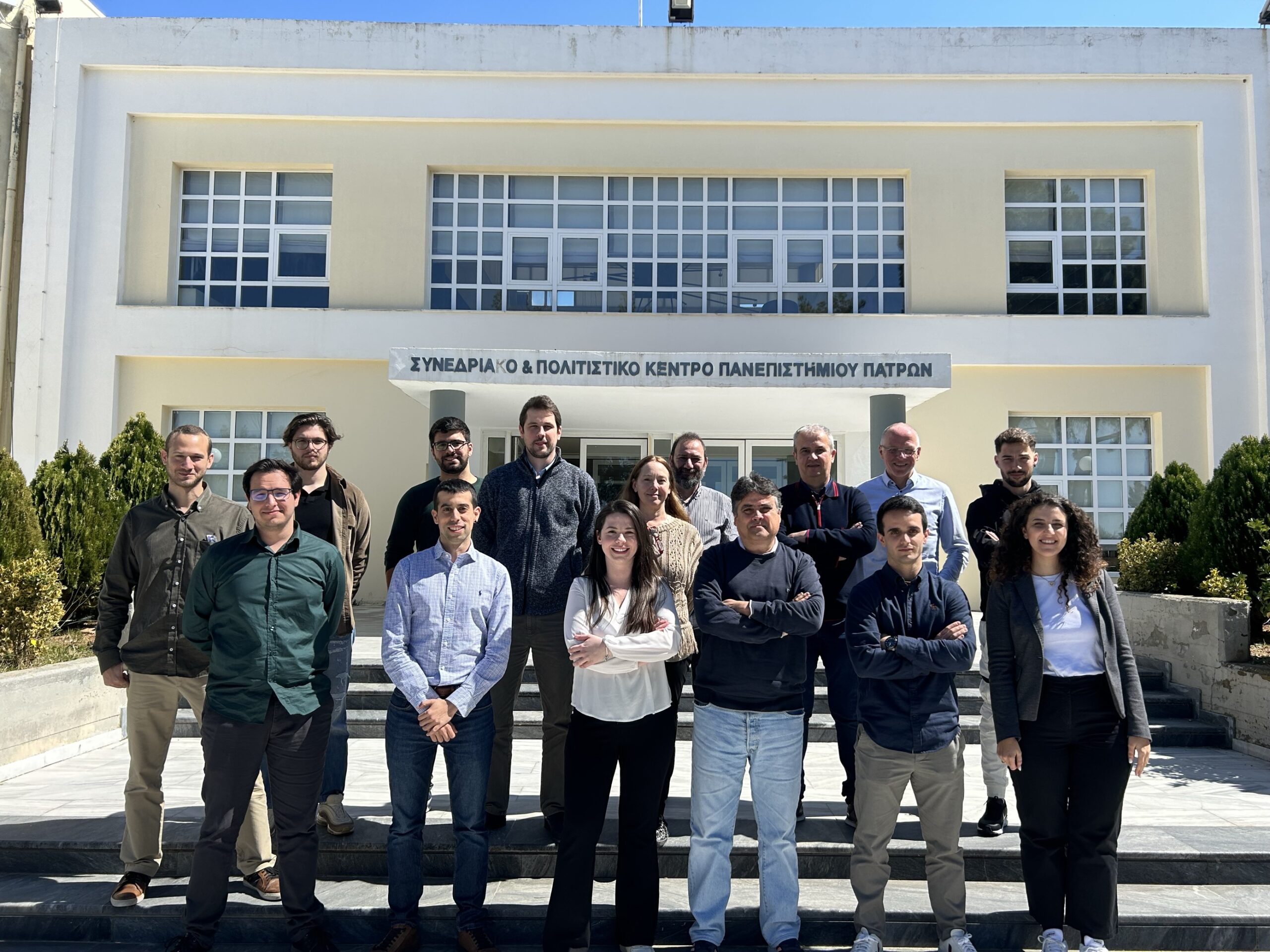
On 20 October 2026, the consortium came together for the COROB Final Event, “Flexible Manufacturing in Action: AI, Data and Cooperative Robotics”. Project Coordinator Iñaki Sainz (LORTEK) opened the event with an overview of the project’s achievements, before DGH and GIZELIS Robotics presented the two use cases in action. The Open Call beneficiaries then pitched their solutions, showcasing the impact of COROB’s cascading funding. The event closed with a reflection on lessons learned and the way forward.
A team effort
None of this would have been possible without the commitment of the eight partners who made up the COROB consortium: LORTEK LMS – University of Patras Eindhoven University of Technology Netcompany Intrasoft DGH GIZELIS Robotics FundingBox Digital for Planet
Researchers, engineers, technology providers, industrial end users, funding experts and communicators worked side by side throughout the project, combining their expertise to turn an ambitious vision into validated, working solutions. We are equally grateful to our Open Call beneficiaries, our sister projects in the AI, Data and Robotics Partnership, PERKS and dAIry 4.0, and everyone who followed, supported and engaged with COROB along the way.
Looking ahead
COROB has shown how humans, robots, AI and data can work together to create manufacturing systems that are more flexible, resilient, sustainable and accessible. And the impact does not stop at welding and repair: the concepts developed in COROB can be transferred to many other sectors facing high-mix, low-volume production challenges.
“COROB has demonstrated that the future of manufacturing is cooperative. By bringing together robotics, artificial intelligence, interoperable digital platforms, and human expertise, we have shown that flexible and sustainable production is not only possible but ready for industrial adoption. The project leaves behind not only successful demonstrators, but also an open ecosystem and a strong foundation for the next generation of Industry 5.0 manufacturing solutions.”
— Iñaki Sainz, COROB Project Coordinator, LORTEK
The project’s public deliverables, scientific publications, presentations and videos remain available on the COROB website.
Thank you for being part of the COROB journey!